

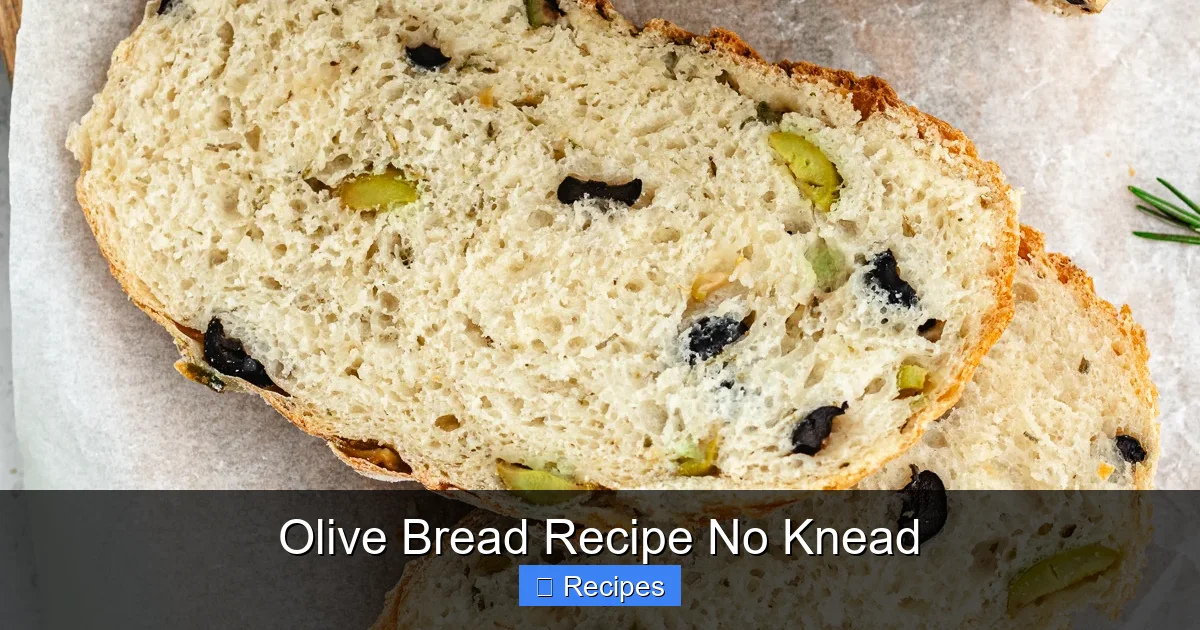
This no-knead olive bread recipe delivers a rustic, aromatic loaf with a crispy crust and tender interior—no stand mixer or kneading required. With just a few simple ingredients and a long, slow rise, you’ll enjoy homemade artisan bread that’s perfect for sandwiches, dipping, or enjoying on its own.
Key Takeaways
- No kneading required: This recipe uses a long fermentation process to develop gluten naturally, eliminating the need for hand or machine kneading.
- Simple ingredients: Flour, water, yeast, salt, and olives—just five core ingredients make this flavorful bread possible.
- Hands-off method: Once mixed, the dough rests for 12–18 hours, making it ideal for busy schedules or overnight baking.
- Customizable olives: Use Kalamata, green, or Castelvetrano olives—or a mix—to suit your taste preferences.
- Crispy crust, soft crumb: Baking in a preheated Dutch oven traps steam, creating a professional-quality crust and airy interior.
- Perfect for beginners: Minimal technique and forgiving timing make this recipe ideal for first-time bread bakers.
- Great for meal prep: Bake once and enjoy fresh bread for days—ideal for toast, bruschetta, or charcuterie boards.
Quick Answers to Common Questions
Can I use black olives in this recipe?
Yes! Black olives work well, especially if you like a milder, slightly sweet flavor. Just be sure to pit and chop them before adding to the dough.
How do I know when the dough has risen enough?
The dough should roughly double in size, look puffy, and have bubbles on the surface. It’s ready when it passes the “poke test”—gently press it with a floured finger; if the indentation slowly springs back, it’s done.
Can I make this bread without a Dutch oven?
Yes, but the crust won’t be as crispy. Use a baking sheet and place a pan of water on the lower rack to create steam. Cover the bread with a metal bowl for the first 20 minutes if possible.
How long does the bread stay fresh?
Stored in a paper bag at room temperature, it stays fresh for 2–3 days. For longer storage, freeze slices in a zip-top bag for up to 3 months.
Can I freeze the dough before baking?
Absolutely! After the first rise, shape the dough, place it on parchment, and freeze. When ready to bake, thaw in the fridge overnight, then proof and bake as usual.
📑 Table of Contents
Why This No-Knead Olive Bread Recipe Is a Game-Changer
If you’ve ever dreamed of baking homemade bread but were intimidated by the kneading, shaping, and precise timing, this olive bread recipe no knead is about to become your new best friend. Imagine waking up to the rich, savory aroma of freshly baked bread—crispy on the outside, soft and chewy on the inside, packed with briny, buttery olives—without spending hours in the kitchen. That’s exactly what this recipe delivers.
This method, inspired by the famous no-knead bread technique popularized by Jim Lahey and Mark Bittman, takes the stress out of bread baking. Instead of labor-intensive kneading, it relies on time and natural fermentation to develop structure and flavor. The result? A rustic, artisan-style loaf that looks and tastes like it came from a French bakery—but costs just pennies to make at home. Whether you’re a seasoned home cook or a total beginner, this recipe is approachable, reliable, and deeply satisfying.
What Makes This Olive Bread Special?
Olive bread is more than just bread with olives thrown in—it’s a celebration of Mediterranean flavors. The olives add bursts of saltiness and richness that complement the mild, slightly tangy dough. Unlike sweet breads or heavily seasoned varieties, this loaf strikes a perfect balance: savory without being overpowering, complex without being complicated.
Visual guide about Olive Bread Recipe No Knead
Image source: stat.ameba.jp
The Role of Olives
Olives are the star here, and choosing the right kind can elevate your loaf. Kalamata olives offer a bold, fruity flavor with a hint of smokiness—great for those who love intense taste. Green olives, especially those stuffed with garlic or pimento, add a bright, zesty kick. For a milder, buttery profile, go with Castelvetrano olives, known for their vibrant green color and mild, nutty flavor. You can even mix and match—try half Kalamata and half green for a balanced, dynamic bite.
Why No Knead Works So Well
The secret to this bread’s success lies in its long, slow fermentation. When you mix flour, water, yeast, and salt and let it sit for 12 to 18 hours, natural enzymes break down the starches and proteins in the flour. This process, called autolyse, develops gluten without any physical kneading. The result is a dough that’s elastic, airy, and full of flavor—thanks to the extended rise time that allows yeast and bacteria to work their magic.
Plus, the high hydration (the ratio of water to flour) creates an open, chewy crumb—just like professional sourdough. But unlike sourdough, this recipe uses instant yeast, so you don’t need a starter or weeks of prep. It’s the best of both worlds: artisan quality with modern convenience.
Ingredients You’ll Need
One of the best things about this olive bread recipe no knead is how few ingredients it requires. You probably already have most of them in your pantry. Here’s what you’ll need:
- 3 cups (360g) all-purpose flour: Bread flour works too, but all-purpose is more accessible and yields a tender crumb.
- 1 ¼ cups (300ml) lukewarm water: Not hot—too hot will kill the yeast. Aim for around 85–90°F (29–32°C).
- 2 tsp (7g) instant yeast: Also called rapid-rise or bread machine yeast. No need to activate it in water first.
- 1 ½ tsp (9g) salt: Enhances flavor and controls yeast activity. Use fine sea salt or table salt.
- 1 cup (150g) pitted olives: Roughly chopped. Drain and pat dry to prevent excess moisture in the dough.
- Optional: 1 tsp dried oregano or thyme: Adds a subtle herbal note that pairs beautifully with olives.
Equipment Essentials
You don’t need fancy tools, but a few key items make the process smoother:
- A large mixing bowl (glass or ceramic works best)
- A Dutch oven or heavy oven-safe pot with a lid (cast iron is ideal)
- Parchment paper (to lift the dough in and out easily)
- A kitchen scale (optional but recommended for accuracy)
Step-by-Step Instructions
Now for the fun part—baking! This recipe is broken into three simple phases: mix, rise, and bake. Total hands-on time is under 15 minutes.
Step 1: Mix the Dough
In a large bowl, combine the flour, yeast, and salt. Give it a quick stir. Add the lukewarm water and mix with a wooden spoon or your hands until a shaggy, sticky dough forms. It won’t look smooth—that’s okay! Fold in the chopped olives (and herbs, if using) until evenly distributed. Cover the bowl tightly with plastic wrap or a silicone lid.
Step 2: First Rise (Bulk Fermentation)
Let the dough rest at room temperature for 12 to 18 hours. Yes, really! This long rise is what develops flavor and texture. The dough will rise, bubble, and double in size. On warmer days, 12 hours may be enough. In cooler kitchens, it might take closer to 18. Don’t worry about being exact—this recipe is very forgiving.
Step 3: Shape and Second Rise
After the first rise, lightly flour a work surface. Gently turn the dough out onto it—don’t punch it down aggressively. Fold the edges toward the center to form a loose round. Place it seam-side up on a piece of parchment paper. Cover with a towel and let it rest for 30 minutes to 1 hour. This short rise, called proofing, helps the dough relax and rise evenly in the oven.
Step 4: Preheat and Bake
About 30 minutes before baking, place your Dutch oven (with lid) into the oven and preheat to 450°F (230°C). Once hot, carefully remove the pot. Lift the dough (using the parchment as a sling) and place it into the pot. Cover and bake for 30 minutes. Then, remove the lid and bake for another 10–15 minutes, until the crust is deep golden brown.
Step 5: Cool and Enjoy
Transfer the bread to a wire rack and let it cool for at least 1 hour before slicing. I know it’s tempting, but cutting into it too soon will make the inside gummy. Patience pays off—this is when the crumb sets and the flavors meld.
Tips for Perfect Olive Bread Every Time
Even though this recipe is simple, a few small tweaks can make a big difference:
- Use a kitchen scale: Measuring flour by volume can vary by up to 25%. Weighing ensures consistency.
- Don’t skip the parchment: It makes transferring the dough safe and easy—no sticking or tearing.
- Adjust olive size: Chop olives into pea-sized pieces for even distribution. Whole olives can create large holes or sink to the bottom.
- Experiment with add-ins: Try adding sun-dried tomatoes, roasted garlic, or a sprinkle of Parmesan for extra depth.
- Store properly: Keep cooled bread in a paper bag or bread box for up to 3 days. For longer storage, slice and freeze in a zip-top bag.
Serving Suggestions and Pairings
This olive bread is incredibly versatile. Serve it warm with a drizzle of high-quality olive oil and a sprinkle of flaky sea salt. Slice it for bruschetta topped with ripe tomatoes, basil, and mozzarella. Use it for hearty sandwiches—try it with prosciutto, arugula, and fig jam. Or simply enjoy it alongside a bowl of minestrone or a creamy tomato soup.
It’s also a showstopper on a charcuterie board, paired with cheeses like aged cheddar, manchego, or creamy brie. And don’t forget wine—this bread pairs beautifully with a crisp Sauvignon Blanc or a light-bodied Pinot Noir.
Conclusion
This olive bread recipe no knead proves that incredible homemade bread doesn’t require skill, time, or fancy equipment. With just five ingredients and a little patience, you can create a loaf that’s crusty, flavorful, and deeply satisfying. It’s the kind of recipe you’ll return to again and again—whether you’re feeding a crowd, meal prepping for the week, or simply treating yourself to something special.
So go ahead—mix that dough tonight, let it rise while you sleep, and wake up to the smell of fresh bread. Your kitchen, your taste buds, and your inner baker will thank you.
Frequently Asked Questions
What type of olives work best in this recipe?
Kalamata, green, and Castelvetrano olives are all excellent choices. Kalamata offers bold flavor, green olives add brightness, and Castelvetrano olives are mild and buttery. You can also mix types for a balanced taste.
Can I use active dry yeast instead of instant yeast?
Yes, but you may need to let the dough rise a bit longer. Active dry yeast can take more time to activate, especially in cooler environments. The final texture will still be great.
Why is my bread dense instead of airy?
This can happen if the dough wasn’t hydrated enough, the rise time was too short, or the olives released too much moisture. Make sure to measure flour by weight and chop olives finely to avoid sinking.
Can I add other ingredients like herbs or cheese?
Absolutely! Dried oregano, thyme, rosemary, or a handful of grated Parmesan can enhance the flavor. Add them with the olives during mixing.
Do I need to refrigerate the dough during the long rise?
No, room temperature is fine. However, if your kitchen is very warm (above 78°F/25°C), you can refrigerate it for up to 24 hours for a slower, more controlled rise.
Can I make this recipe gluten-free?
This specific recipe isn’t gluten-free, as it relies on wheat flour for structure. However, you can experiment with gluten-free flour blends, though results may vary in texture and rise.
