

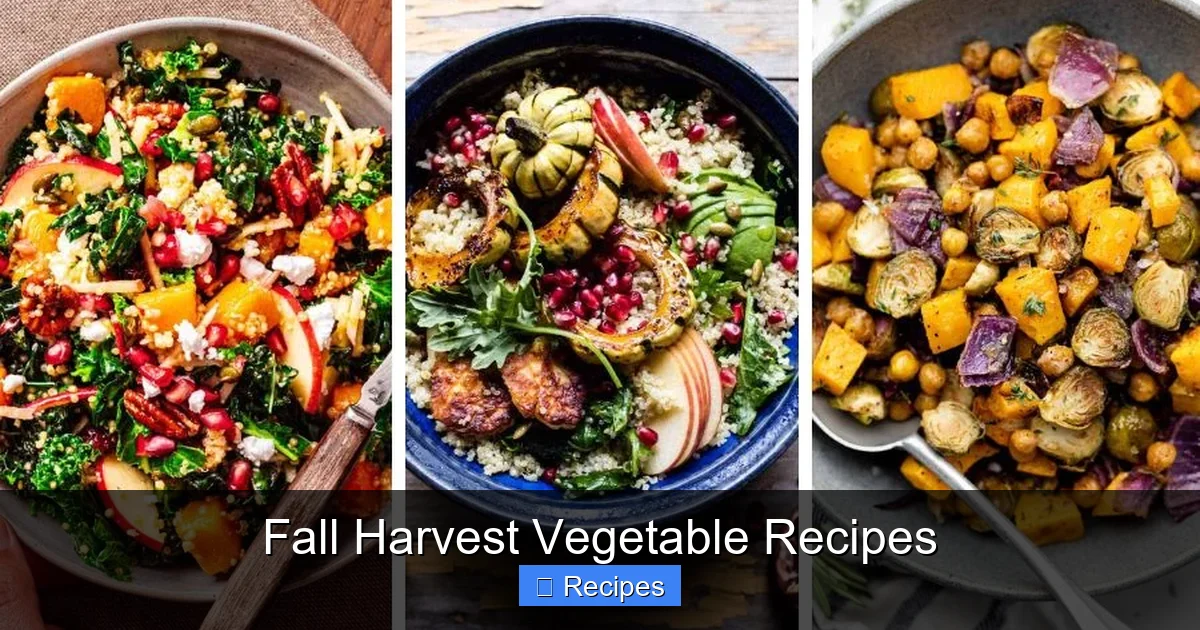
Fall is the perfect time to enjoy nature’s bounty with vibrant, nutrient-rich vegetables like squash, sweet potatoes, and Brussels sprouts. These fall harvest vegetable recipes are simple, flavorful, and ideal for weeknight meals or holiday feasts.
As the leaves turn golden and the air grows crisp, kitchens come alive with the warm, comforting aromas of fall. It’s that magical time of year when nature delivers a treasure trove of vibrant vegetables—sweet potatoes, butternut squash, carrots, Brussels sprouts, and more—all bursting with flavor and nutrients. These aren’t just ingredients; they’re the stars of cozy family dinners, holiday gatherings, and soul-warming meals that celebrate the season.
Fall harvest vegetable recipes are more than just tasty—they’re a way to connect with the rhythm of the earth. When you cook with seasonal produce, you’re not only supporting local farmers, but also enjoying vegetables at their absolute best. They’re fresher, more flavorful, and often more affordable. Plus, they’re packed with vitamins and antioxidants that help keep you healthy as the days grow shorter and colder. Whether you’re roasting, sautéing, or simmering, these recipes turn simple vegetables into something truly special.
Key Takeaways
- Seasonal vegetables shine in fall: Ingredients like pumpkin, kale, and beets are at their peak flavor and nutrition during autumn.
- Roasting enhances natural sweetness: Dry-heat cooking brings out the caramelized depth in root vegetables and squash.
- One-pot meals save time and cleanup: Soups, stews, and casseroles make it easy to pack in multiple veggies with minimal effort.
- Herbs and spices elevate flavor: Cinnamon, sage, thyme, and nutmeg complement earthy fall produce beautifully.
- Freeze leftovers for busy days: Many fall recipes store and reheat well, making meal prep a breeze.
- Mix textures for satisfying dishes: Combine creamy mashed potatoes with crispy roasted Brussels sprouts for balanced bites.
- Use what’s local and fresh: Farmers markets offer the best seasonal picks for authentic fall harvest vegetable recipes.
Quick Answers to Common Questions
What are the best vegetables to use in fall harvest recipes?
Butternut squash, sweet potatoes, Brussels sprouts, carrots, beets, kale, and acorn squash are top choices. They’re in season, flavorful, and versatile for roasting, soups, and stews.
Can I freeze fall vegetable dishes?
Yes! Soups, stews, and roasted vegetables freeze well. Cool completely, store in airtight containers, and label with the date. Most keep for up to three months.
How do I prevent roasted vegetables from becoming soggy?
Don’t overcrowd the baking sheet. Use high heat (400–425°F) and flip halfway through. Excess moisture prevents browning, so pat vegetables dry before roasting.
What spices go well with fall vegetables?
Cinnamon, nutmeg, sage, thyme, rosemary, cumin, and paprika complement fall produce. Use them to enhance natural sweetness and add warmth.
Are fall harvest vegetable recipes healthy?
Absolutely. They’re rich in fiber, vitamins, and antioxidants. Cooking methods like roasting and steaming preserve nutrients better than frying.
📑 Table of Contents
Why Fall Vegetables Are a Culinary Goldmine
Fall vegetables are nature’s comfort food. After a long growing season, they’ve developed deep, complex flavors that shine in both simple and elaborate dishes. Think of the rich sweetness of roasted carrots, the nutty depth of caramelized onions, or the creamy texture of mashed sweet potatoes. These aren’t just side dishes—they can be the heart of a meal.
Nutritional Powerhouses
Fall produce is loaded with essential nutrients. Sweet potatoes are rich in vitamin A, which supports eye health, while kale and Brussels sprouts offer a powerful dose of vitamin C and fiber. Beets are known for their natural nitrates, which can boost circulation and energy. By incorporating these vegetables into your meals, you’re not just eating well—you’re fueling your body for the colder months ahead.
Flavor That Pairs Perfectly with Spices
One of the joys of fall cooking is how well these vegetables work with warming spices. A sprinkle of cinnamon on roasted apples and pears, a dash of nutmeg in mashed squash, or a few fresh sage leaves sautéed with garlic and onions—these combinations create layers of flavor that feel like a hug in a bowl. Don’t be afraid to experiment: a little cumin can add smokiness to roasted carrots, while thyme brings out the earthiness in mushrooms and potatoes.
Top Fall Vegetables to Use in Your Recipes
Not all vegetables are created equal when it comes to fall cooking. Some truly shine during this season, offering versatility, flavor, and texture that make them ideal for a wide range of dishes.
Squash Varieties
Butternut, acorn, and spaghetti squash are fall favorites. Butternut squash is creamy and sweet, perfect for soups, risottos, or roasted as a side. Acorn squash holds its shape well and can be halved, stuffed with grains or beans, and baked. Spaghetti squash, when roasted and scraped, creates strands that mimic pasta—great for a low-carb alternative.
Root Vegetables
Carrots, parsnips, beets, and turnips are staples of fall cooking. Roasting them brings out their natural sugars, turning them golden and caramelized. Try tossing them with olive oil, salt, and rosemary, then roasting at 400°F for 25–30 minutes. They’re delicious on their own or mixed into grain bowls and salads.
Leafy Greens and Cruciferous Veggies
Kale, Swiss chard, and Brussels sprouts are in peak season now. Massage kale with a little lemon juice and olive oil to soften it for salads. Roast Brussels sprouts until crispy on the edges—they’re far from the bitter veggies of childhood when cooked right. Add them to pasta, grain dishes, or serve alongside roasted meats.
Easy Fall Harvest Vegetable Recipes to Try Tonight
You don’t need to be a chef to create delicious fall meals. These recipes are simple, require minimal ingredients, and deliver maximum flavor.
Roasted Root Vegetable Medley
This one-pan wonder is a fall classic. Chop equal parts carrots, parsnips, sweet potatoes, and beets into 1-inch cubes. Toss with olive oil, salt, pepper, and a pinch of thyme. Spread on a baking sheet and roast at 425°F for 30–35 minutes, flipping halfway. The result? A colorful, caramelized side dish that pairs beautifully with grilled chicken or turkey.
Creamy Butternut Squash Soup
Start by roasting a halved butternut squash until tender. Scoop out the flesh and blend with sautéed onions, garlic, vegetable broth, and a splash of coconut milk. Season with cinnamon, nutmeg, and a touch of maple syrup for balance. Serve with crusty bread and a sprinkle of toasted pumpkin seeds for crunch.
Maple-Glazed Brussels Sprouts with Bacon
Cut Brussels sprouts in half and toss with olive oil, salt, and pepper. Roast at 400°F for 20 minutes. In the last 5 minutes, add crumbled bacon and a drizzle of maple syrup. The sweet-salty combo is irresistible and makes even picky eaters reach for seconds.
Stuffed Acorn Squash
Cut an acorn squash in half, remove seeds, and roast cut-side down for 25 minutes. Flip, fill with a mixture of cooked quinoa, sautéed kale, dried cranberries, and toasted pecans. Drizzle with a little balsamic glaze and bake another 10 minutes. It’s a complete, colorful meal in one dish.
Sweet Potato and Black Bean Tacos
Roast cubed sweet potatoes with cumin, chili powder, and paprika. Warm corn tortillas and fill with the sweet potatoes, black beans, avocado slices, and a squeeze of lime. Top with cilantro and a dollop of Greek yogurt for a vegetarian taco that’s hearty and satisfying.
Tips for Cooking with Fall Vegetables
Even the best ingredients need the right techniques to shine. These tips will help you get the most out of your fall harvest.
Prep Ahead for Faster Meals
Wash, peel, and chop vegetables on the weekend. Store them in airtight containers in the fridge. This makes weeknight cooking a breeze—just toss and roast or sauté.
Don’t Overcook
Fall vegetables are best when they retain a bit of texture. Overcooking can turn them mushy and dull their flavor. Roast until tender but still slightly firm, and steam greens just until wilted.
Balance Sweet and Savory
Many fall vegetables are naturally sweet. Balance them with savory elements like garlic, onions, or umami-rich ingredients like soy sauce or miso. A splash of vinegar or lemon juice can also cut through richness and brighten the dish.
Use the Whole Vegetable
Save squash seeds to roast with salt and spices for a crunchy snack. Use beet greens in sautéed dishes or soups. Carrot tops can be blended into pesto. Reducing food waste is good for your wallet and the planet.
How to Store and Preserve Fall Produce
To enjoy fall flavors all season long, proper storage is key.
Short-Term Storage
Most root vegetables keep well in a cool, dark place for weeks. Store potatoes, carrots, and beets in a breathable bag in the pantry or root cellar. Keep squash whole and uncut at room temperature for up to a month.
Freezing for Later
Many fall vegetables freeze beautifully. Blanch greens like kale or chard before freezing. Cook and puree squash or sweet potatoes, then freeze in portion-sized containers. Soups and stews can be frozen for up to three months—just leave room for expansion.
Canning and Pickling
Try pickling beets or making chutney with apples and onions. These preserved treats add a tangy kick to sandwiches and cheese boards all winter long.
Bringing Fall Flavors to the Table
Cooking with fall vegetables isn’t just about feeding your body—it’s about creating warmth, comfort, and connection. Whether you’re hosting a dinner party or enjoying a quiet meal at home, these recipes invite you to slow down and savor the season.
Try setting the table with autumn colors—deep reds, oranges, and browns—and light a candle scented with cinnamon or clove. Play some soft music and let the aroma of roasted vegetables fill your home. These small touches turn a simple meal into a celebration of the season.
And don’t forget to involve the whole family. Kids love helping wash vegetables, stir soups, or toss roasted veggies with olive oil. It’s a great way to teach them about where food comes from and the joy of cooking with fresh, seasonal ingredients.
Fall harvest vegetable recipes are more than just meals—they’re memories in the making. So grab a basket, visit your local farmers market, and let the flavors of autumn inspire your next delicious dish.
Frequently Asked Questions
What makes fall vegetables different from summer ones?
Fall vegetables are typically root crops and hardy greens that store well and develop richer, sweeter flavors after exposure to cooler temperatures. They’re ideal for roasting and slow cooking.
Can I substitute fresh herbs with dried in fall recipes?
Yes, but use about one-third the amount. Dried herbs are more concentrated. Add them early in cooking so they have time to rehydrate and release flavor.
How do I choose the best squash at the store?
Look for firm, heavy squash with unblemished skin. Avoid soft spots or mold. The stem should be dry and intact, not shriveled or wet.
Are fall harvest vegetable recipes kid-friendly?
Many are! Roasted sweet potatoes, butternut squash soup, and maple-glazed carrots are naturally sweet and appealing to children. Involve them in prep to spark interest.
Can I make these recipes vegetarian or vegan?
Most fall vegetable recipes are naturally plant-based. Just skip animal products like bacon or dairy, and use plant-based alternatives like coconut milk or nutritional yeast.
What’s the easiest way to peel butternut squash?
Microwave the whole squash for 2–3 minutes to soften the skin, then peel with a vegetable peeler. Alternatively, roast it whole, scoop out the flesh, and blend.
