

Wondering if your Thermomix can fully replace a stand mixer? While it’s a versatile multitasker, it has limits when it comes to heavy-duty mixing and large batches. This guide breaks down the strengths and weaknesses of both appliances so you can decide what’s best for your kitchen.
Key Takeaways
- Thermomix excels at mixing batters and doughs but struggles with large volumes. It’s ideal for small to medium recipes but not built for big-batch baking.
- Stand mixers are unmatched for heavy-duty tasks like kneading bread or whipping cream. Their powerful motors and large bowls make them essential for serious bakers.
- Thermomix offers built-in weighing, cooking, and blending—features stand mixers lack. It’s a true multitasker that saves counter space and time.
- Stand mixers allow hands-free operation and consistent results over long mixing times. You can walk away while it works—something Thermomix doesn’t allow.
- Thermomix is quieter and easier to clean than most stand mixers. Its all-in-one design means fewer parts to wash.
- For occasional bakers, Thermomix may be enough. But frequent bakers or bread lovers will still want a stand mixer.
- Consider your baking habits, kitchen space, and budget before choosing. Both appliances have unique strengths—your needs should guide the decision.
📑 Table of Contents
Introduction: The Great Kitchen Showdown
You’re in the kitchen, ready to whip up a batch of chocolate chip cookies or knead a loaf of sourdough. You reach for your Thermomix—but then pause. Can it really do everything a stand mixer can? Or are you missing out on that classic, powerful mixing action only a stand mixer delivers?
This is a question many home cooks and bakers ask, especially those drawn to the Thermomix’s sleek design and all-in-one functionality. On one hand, the Thermomix is a marvel of modern kitchen tech—capable of chopping, blending, steaming, and yes, even mixing. On the other, the stand mixer has been a staple in bakeries and homes for decades, trusted for its reliability and muscle. So, can Thermomix truly replace stand mixer? The answer isn’t black and white. It depends on what you cook, how often you bake, and how much counter space you’re willing to dedicate.
Understanding the Thermomix: More Than Just a Mixer
The Thermomix, particularly models like the TM6, is often called the “Swiss Army knife” of kitchen appliances. It combines over 12 functions in one device: weighing, chopping, blending, steaming, sautéing, and—yes—mixing. Its built-in scale means you can add ingredients directly into the bowl without dirtying extra dishes. The guided cooking feature walks you through recipes step by step, making it ideal for beginners or those who love precision.

Visual guide about Can Thermomix Replace Stand Mixer
Image source: img.myipadbox.com
Mixing Capabilities of the Thermomix
When it comes to mixing, the Thermomix uses a dough blade and variable speed settings to handle batters, cookie dough, pancake mix, and even soft bread dough. It’s great for recipes that require gradual incorporation of ingredients, like cake batters or muffin mixes. The reverse function helps prevent overmixing, which is a plus for delicate bakes.
However, there are limits. The Thermomix bowl holds about 2.2 liters, which is fine for most home recipes—but if you’re making double batches or large loaves of bread, you’ll hit capacity fast. Also, the mixing action isn’t as vigorous as a stand mixer’s paddle or dough hook. It’s more of a gentle fold-and-stir motion, which works for cakes but may not develop gluten effectively for chewy bread.
Real-World Example: Baking a Cake
Let’s say you’re making a vanilla sponge cake. With the Thermomix, you can cream butter and sugar, add eggs one at a time, and fold in flour—all in the same bowl. The guided mode ensures you don’t overmix, and the built-in scale means no measuring cups. It’s efficient and tidy. But if you’re making a triple batch for a party? You’ll need to mix in stages, which adds time and complexity.
The Stand Mixer: A Baking Powerhouse
If the Thermomix is a multitool, the stand mixer is a specialist. Designed specifically for mixing, beating, and kneading, it’s the go-to tool for serious bakers. Whether it’s a KitchenAid, Kenwood, or Bosch, stand mixers are built for performance and durability.
Strengths in Mixing and Kneading
Stand mixers shine when it comes to tasks that require sustained power and consistent motion. Kneading bread dough? No problem. Whipping egg whites to stiff peaks? Easy. Making buttercream for a three-tier cake? The stand mixer handles it with ease. Its motor is built to run for long periods without overheating, and the bowl size (typically 4.5 to 7 quarts) allows for large batches.
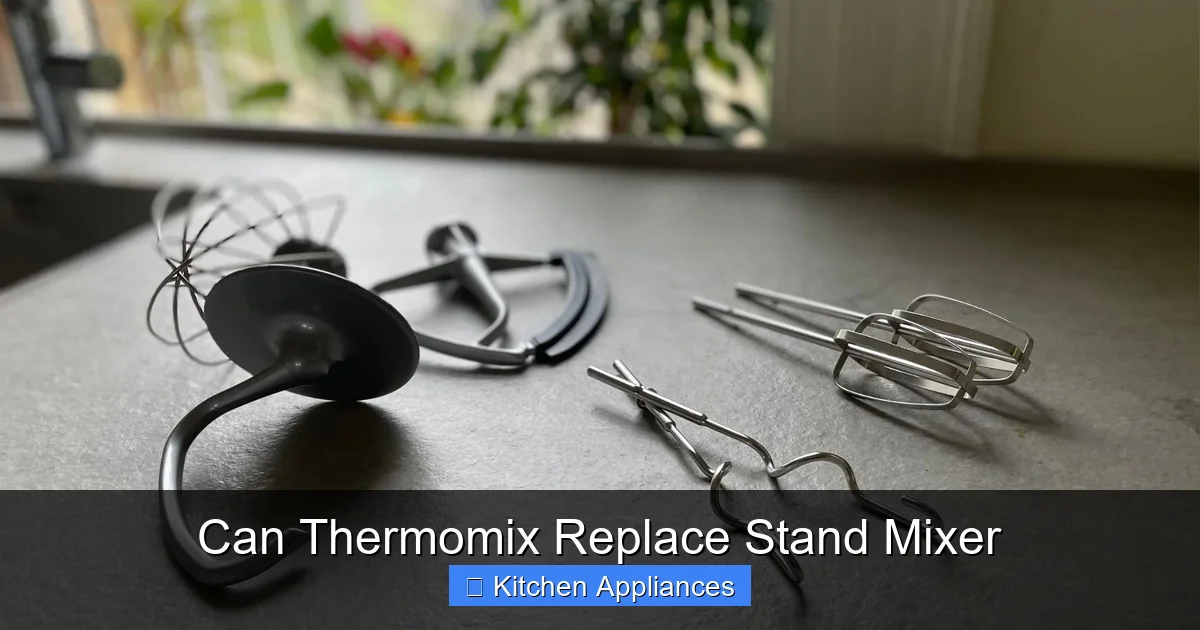
The attachments—like the dough hook, paddle, and whisk—are engineered for specific tasks. The dough hook mimics hand kneading, developing gluten for chewy, airy bread. The paddle ensures even mixing without overworking batters. And the whisk? It’s perfect for light, fluffy meringues and whipped cream.
Hands-Free Convenience
One of the stand mixer’s biggest advantages is that it frees up your hands. Once you’ve added your ingredients, you can walk away while it mixes. This is a game-changer when you’re multitasking in the kitchen—chopping vegetables, prepping pans, or answering a text. The Thermomix, by contrast, requires you to stay nearby, especially during guided recipes.
For example, if you’re making a batch of cinnamon rolls, the stand mixer can knead the dough for 8–10 minutes while you prepare the filling. With the Thermomix, you’d need to monitor the process more closely, pausing to scrape down sides and check consistency.
Comparing Performance: Thermomix vs. Stand Mixer
To truly answer “can Thermomix replace stand mixer,” let’s look at how they stack up in real kitchen scenarios.
Bread Dough: A Clear Winner
When it comes to bread, the stand mixer wins hands down. The Thermomix can handle soft doughs like brioche or pizza dough, but it struggles with high-hydration or stiff doughs like sourdough or bagels. The motor isn’t powerful enough to develop strong gluten networks, and the bowl size limits batch size. If you bake bread weekly, a stand mixer is a must.
Cakes and Cookies: A Toss-Up
For cakes, muffins, and cookies, the Thermomix holds its own. It mixes batters evenly and prevents overmixing, which is key for tender crumb. The built-in scale is a huge time-saver. However, if you’re making large batches or need to whip egg whites separately, the stand mixer’s larger capacity and dedicated whisk attachment give it an edge.
Whipping and Creaming: Stand Mixer Takes the Lead
Whipping cream or egg whites requires speed and air incorporation—something the stand mixer does beautifully. The Thermomix can whip cream, but it’s slower and less effective. For meringues or soufflés, the stand mixer is the safer bet.
Cleanup and Noise
Here, the Thermomix has a clear advantage. Most parts are dishwasher-safe, and there are fewer components to clean. The stand mixer, especially with its multiple attachments, requires more effort. Also, the Thermomix is significantly quieter—great for early morning bakes or small apartments.
Space, Cost, and Lifestyle Considerations
Beyond performance, your kitchen setup and lifestyle play a big role in this decision.
Counter Space
The Thermomix is a single unit that replaces multiple appliances. If you’re tight on space, it’s a smart investment. The stand mixer, while compact, often needs extra storage for attachments. And if you already own a blender, food processor, and steamer, adding a stand mixer might feel redundant.
Budget
Both appliances are premium investments. A high-end Thermomix can cost over $1,500, while a quality stand mixer ranges from $300 to $600. However, the Thermomix’s multifunctionality may justify the higher price if you’re replacing several gadgets.
Baking Frequency
If you bake once a month, the Thermomix might be all you need. But if you’re making bread weekly or hosting holiday cookie swaps, a stand mixer will save you time and frustration. Consider how often you’ll use each function before deciding.
Can You Live Without a Stand Mixer?
For some, the answer is yes. If you mostly bake cakes, muffins, and quick breads, the Thermomix can handle the job. Its precision and ease of use make it a joy for everyday cooking. Plus, you’ll save time on cleanup and measuring.
But if you’re passionate about bread, pastries, or large-batch baking, you’ll likely miss the power and capacity of a stand mixer. The Thermomix simply isn’t built for those tasks. And while it’s versatile, it can’t match the stand mixer’s hands-free convenience.
That said, many home cooks find a happy medium: owning both. Use the Thermomix for everyday cooking and light baking, and the stand mixer for heavy-duty tasks. If you’re choosing one, ask yourself: What do I bake most? How much space do I have? Am I willing to compromise on batch size or mixing power?
Final Verdict: It Depends on Your Kitchen
So, can Thermomix replace stand mixer? The short answer: sometimes. For light to moderate baking, the Thermomix is a capable and convenient alternative. It’s perfect for those who value efficiency, precision, and multifunctionality. But for serious bakers, especially bread lovers, the stand mixer remains irreplaceable.
Think of it this way: the Thermomix is like a talented generalist—great at many things, but not the best at any one. The stand mixer is a specialist—less versatile, but unmatched in its domain. Your choice should reflect your cooking style, not just the appliance’s features.
If you already own a stand mixer, the Thermomix can complement it beautifully—handling prep work while the mixer tackles heavy lifting. And if you’re starting from scratch, consider your priorities. Do you want one appliance that does it all? Or a dedicated tool for perfect mixes every time?
Either way, both appliances have earned their place in modern kitchens. The real winner? You—the cook who gets to enjoy the process, whether it’s with a sleek Thermomix or a trusty stand mixer humming away on the counter.
Frequently Asked Questions
Can Thermomix knead bread dough like a stand mixer?
The Thermomix can knead soft doughs like pizza or brioche, but it struggles with stiff or high-hydration doughs like sourdough. For consistent, strong gluten development, a stand mixer is more reliable.
Is the Thermomix easier to clean than a stand mixer?
Yes, generally. The Thermomix has fewer parts and most components are dishwasher-safe. Stand mixers require more disassembly and manual cleaning, especially for attachments.
Can I whip cream in a Thermomix?
Yes, but it’s slower and less effective than a stand mixer. For light whipping, it works—but for stiff peaks or large batches, a stand mixer is better.
Does the Thermomix have a built-in scale?
Yes, one of its standout features is the integrated scale, allowing you to weigh ingredients directly in the bowl—no extra dishes needed.
Can I use my stand mixer for tasks other than mixing?
Some models offer attachments for grinding meat, making pasta, or spiralizing vegetables. However, they’re not as versatile as the Thermomix for cooking functions like steaming or sautéing.
Should I buy both a Thermomix and a stand mixer?
If you bake frequently and value both convenience and power, owning both can be ideal. Use the Thermomix for prep and light mixing, and the stand mixer for heavy-duty tasks like bread or large batches.
