

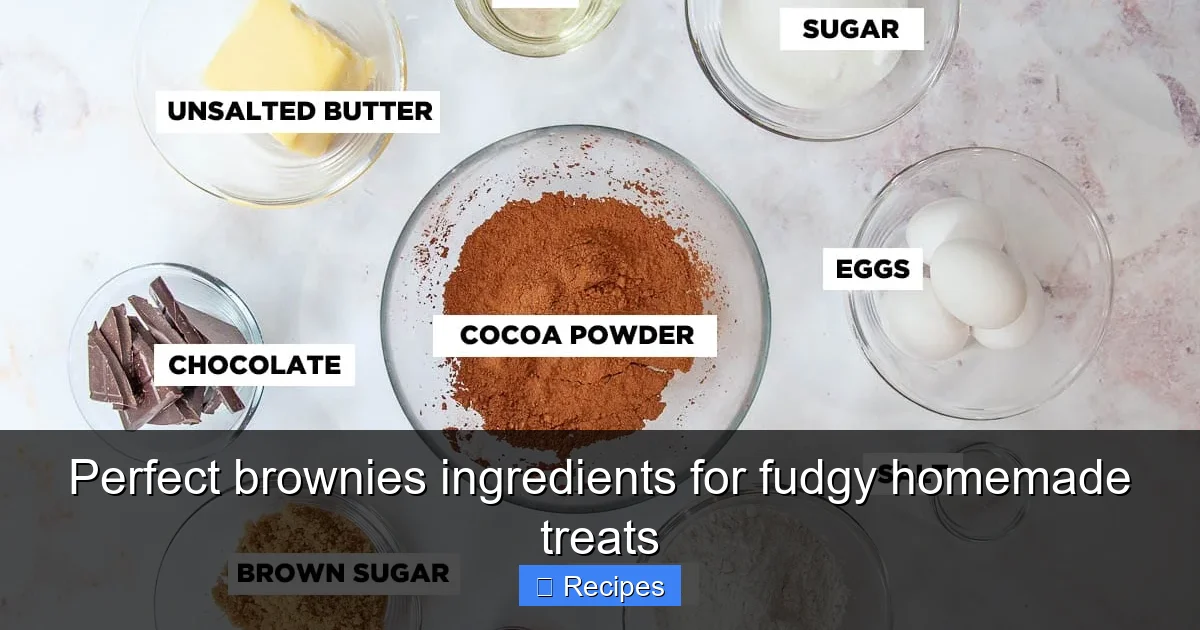
Creating the perfect fudgy brownies starts with the right ingredients. From high-quality cocoa powder to the ideal fat-to-flour ratio, every component plays a key role in achieving that dense, melt-in-your-mouth texture you crave. This guide breaks down the must-have brownies ingredients and how to use them for consistently delicious results.
If you’ve ever bitten into a brownie that’s dense, moist, and deeply chocolatey—the kind that makes you close your eyes and sigh—you know the magic of a truly great homemade treat. But achieving that perfect fudgy texture isn’t just about luck. It’s about understanding the role of each ingredient and how they work together. Whether you’re a beginner or a seasoned baker, knowing the right brownies ingredients can transform your baking from “good” to “unforgettable.”
The secret to fudgy brownies lies in the balance of fat, sugar, and flour. Too much flour, and you get cakey brownies. Too little fat, and they turn dry. The key is using ingredients that contribute to moisture, richness, and structure—without overpowering the chocolate flavor. In this guide, we’ll walk you through every essential ingredient, why it matters, and how to choose the best version for your recipe. From cocoa powder to eggs, we’ll cover it all so you can bake brownies that are consistently rich, chewy, and downright irresistible.
Key Takeaways
- Butter vs. oil: Butter adds rich flavor, while oil keeps brownies moist—choose based on your texture preference.
- Chocolate quality matters: Use high-quality dark chocolate (60–70% cacao) for deep, intense flavor.
- Cocoa powder type: Dutch-processed cocoa yields fudgier results; natural cocoa works but may require adjustments.
- Sugar balance: Granulated and brown sugar create the perfect chew and slight crisp top.
- Eggs are essential: They provide structure and richness—don’t skip or reduce them.
- Flour minimalism: Too much flour dries out brownies—just enough to bind without overmixing.
- Add-ins enhance experience: Nuts, chocolate chips, or sea salt elevate flavor and texture.
Quick Answers to Common Questions
Can I use milk chocolate instead of dark chocolate?
Yes, but milk chocolate is sweeter and less intense. You may need to reduce sugar slightly and expect a softer, less fudgy texture.
What if I don’t have Dutch-processed cocoa?
You can use natural cocoa powder, but avoid recipes with baking soda unless you add a pinch of cream of tartar to balance acidity.
Can I make brownies without eggs?
Yes, use ¼ cup applesauce or mashed banana per egg, but the texture will be denser and less rich.
Why are my brownies cakey?
This usually happens from too much flour, overmixing, or using baking powder. Stick to minimal flour and gentle folding.
How do I fix dry brownies?
Dry brownies often result from overbaking or too much flour. Next time, reduce baking time by 2–3 minutes and measure flour carefully.
📑 Table of Contents
- 1. The Foundation: Chocolate and Cocoa Powder
- 2. Fat: Butter and Oil—Which Is Better?
- 3. Sweeteners: Sugar’s Role in Texture and Flavor
- 4. Eggs: The Binding Agent
- 5. Flour: The Minimalist Approach
- 6. Leavening Agents: Baking Soda or Powder?
- 7. Flavor Boosters and Add-Ins
- 8. Optional but Worthwhile: Coffee or Espresso
- 9. Mixing and Baking Tips for Perfect Texture
- 10. Storing and Serving
- Conclusion
1. The Foundation: Chocolate and Cocoa Powder
At the heart of every great brownie is chocolate—either in bar form or as cocoa powder. But not all chocolate is created equal, and choosing the right kind can make or break your batch.
Dark Chocolate Bars (60–70% Cacao)
Using high-quality dark chocolate gives your brownies a deep, complex flavor. Look for bars with 60–70% cacao content—this range offers the perfect balance of sweetness and bitterness. Brands like Ghirardelli, Valrhona, or Lindt are excellent choices. Melt the chocolate gently with butter (we’ll get to that next) to create a smooth, glossy base that sets the tone for fudgy texture.
Cocoa Powder: Dutch-Processed vs. Natural
Cocoa powder adds intensity without extra fat. For fudgy brownies, Dutch-processed cocoa is often preferred. It’s treated with an alkali, which mellows the acidity and creates a smoother, richer flavor. Natural cocoa powder is more acidic and can react differently with leavening agents—so if your recipe calls for baking soda, Dutch-processed is usually the better fit. Hershey’s Special Dark or Droste are great Dutch-process options.
2. Fat: Butter and Oil—Which Is Better?
Fat is what gives brownies their luxurious mouthfeel. But should you use butter, oil, or both?
Butter for Flavor, Oil for Moisture
Butter adds a rich, creamy flavor that’s hard to replicate. It also helps create a slightly crisp top—a hallmark of classic fudgy brownies. However, butter contains water, which can lead to a cakier texture if overmixed. For best results, use unsalted butter so you can control the salt level.
On the other hand, oil (like canola, vegetable, or melted coconut oil) keeps brownies moist and tender for days. It doesn’t solidify at room temperature like butter, so oil-based brownies stay soft longer. Many bakers swear by a combination: melted butter for flavor and a tablespoon of oil for extra moisture.
Pro Tip: Melt, Don’t Boil
When melting butter and chocolate together, use low heat or a double boiler. High heat can scorch the chocolate, leading to a grainy texture. Stir constantly until smooth and glossy.
3. Sweeteners: Sugar’s Role in Texture and Flavor
Sugar isn’t just for sweetness—it affects texture, moisture, and browning.
Granulated Sugar for Structure
Granulated sugar helps create a slight crust on top while keeping the interior chewy. It also contributes to the browning process (Maillard reaction), giving brownies that appealing golden edge.
Brown Sugar for Moisture and Chew
Brown sugar contains molasses, which adds moisture and a subtle caramel flavor. It also helps brownies stay soft longer. For extra fudgy results, use a mix of both sugars—typically ¾ cup granulated and ¼ cup brown sugar in a standard recipe.
Alternative Sweeteners?
While you can experiment with coconut sugar or maple syrup, they may alter texture and browning. Stick to traditional sugars for consistent results.
4. Eggs: The Binding Agent
Eggs are crucial for structure and richness. They emulsify the batter, trap air, and help set the brownies as they bake.
Room Temperature Is Key
Always use room-temperature eggs. Cold eggs can cause the melted chocolate and butter to seize, creating a lumpy batter. Let them sit out for 30 minutes before using, or warm them briefly in a bowl of warm water.
Don’t Overbeat
Mix eggs in just until combined. Overbeating incorporates too much air, leading to a cakey texture. Fold gently with a spatula for the best results.
5. Flour: The Minimalist Approach
Unlike cakes, brownies don’t need much flour. In fact, too much can dry them out.
All-Purpose Flour Only
Use plain all-purpose flour—no need for cake flour or self-rising. Sift it to avoid lumps and measure accurately. Too much flour = dry brownies. A standard recipe uses about ½ to ¾ cup for 8–9 brownies.
Gluten-Free Option
For gluten-free brownies, use a 1:1 gluten-free flour blend. Look for one with xanthan gum, or add ¼ teaspoon yourself to help bind the batter.
6. Leavening Agents: Baking Soda or Powder?
Most fudgy brownie recipes skip leavening agents entirely. That’s because you want dense, not fluffy, texture.
When to Use Baking Soda
If your recipe includes acidic ingredients like natural cocoa powder or buttermilk, a small amount of baking soda (¼ to ½ teaspoon) can help balance pH and enhance browning. But use sparingly—too much can cause spreading or a metallic taste.
Avoid Baking Powder
Baking powder adds lift, which leads to cakey brownies. Stick to no leavening or just baking soda if needed.
7. Flavor Boosters and Add-Ins
Once you’ve mastered the basics, it’s time to get creative.
Vanilla Extract
A teaspoon of pure vanilla extract enhances chocolate flavor without overpowering it. Avoid imitation versions—they can taste artificial.
Salt: The Secret Weapon
Salt balances sweetness and deepens flavor. Use ¼ to ½ teaspoon of fine sea salt. For a gourmet touch, sprinkle flaky sea salt on top before baking.
Add-Ins for Texture and Fun
Stir in ½ cup of chopped walnuts, pecans, or chocolate chips for extra indulgence. White chocolate chunks, dried cherries, or espresso powder (1 teaspoon) can also elevate your brownies. Just don’t overdo it—too many add-ins can disrupt the batter.
8. Optional but Worthwhile: Coffee or Espresso
Adding a tablespoon of instant espresso powder or strong brewed coffee won’t make your brownies taste like coffee. Instead, it intensifies the chocolate flavor, making it richer and more complex. It’s a baker’s trick that’s totally optional but highly recommended.
9. Mixing and Baking Tips for Perfect Texture
Even with the best ingredients, technique matters.
Fold, Don’t Stir
Once dry ingredients are added, fold gently with a spatula. Overmixing develops gluten, leading to tough brownies.
Bake Until Just Set
Fudgy brownies are done when the edges are set but the center still jiggles slightly. A toothpick inserted should come out with a few moist crumbs—not clean. Underbaking is better than overbaking.
Cool Completely
Let brownies cool in the pan for at least an hour before cutting. This allows them to set and makes clean slices easier.
10. Storing and Serving
Store brownies in an airtight container at room temperature for up to 5 days. For longer storage, wrap individually and freeze for up to 3 months. Thaw at room temperature before serving.
Serve warm with a scoop of vanilla ice cream or a dusting of powdered sugar for a decadent dessert.
Conclusion
Baking the perfect fudgy brownie is all about understanding your ingredients. From choosing the right chocolate to balancing fats and sugars, every decision impacts the final texture and flavor. With this guide, you now know exactly which brownies ingredients to use—and why—to create rich, chewy, melt-in-your-mouth treats every time. So preheat that oven, gather your tools, and get ready to bake brownies that will impress family, friends, and your own sweet tooth.
Frequently Asked Questions
What’s the difference between fudgy and cakey brownies?
Fudgy brownies are dense, moist, and rich, with a high fat-to-flour ratio. Cakey brownies are lighter and airier, often due to more flour, leavening agents, or overmixing.
Can I freeze brownie batter?
Yes, freeze unbaked batter in a greased pan for up to 1 month. Thaw in the fridge overnight, then bake as usual, adding 2–3 minutes to the baking time.
Why do my brownies crack on top?
Cracking can happen from overmixing, too much sugar, or high oven temperature. Ensure ingredients are at room temperature and mix just until combined.
Can I use oil instead of butter?
Absolutely. Oil keeps brownies moist and soft. Use a neutral oil like canola or vegetable, or melted coconut oil for a subtle flavor.
How do I make gluten-free brownies?
Replace all-purpose flour with a 1:1 gluten-free blend. Add ¼ teaspoon xanthan gum if it’s not already included to help bind the batter.
What’s the best way to cut clean brownie slices?
Let brownies cool completely, then use a sharp knife dipped in hot water and wiped clean between cuts for neat, professional-looking slices.
