

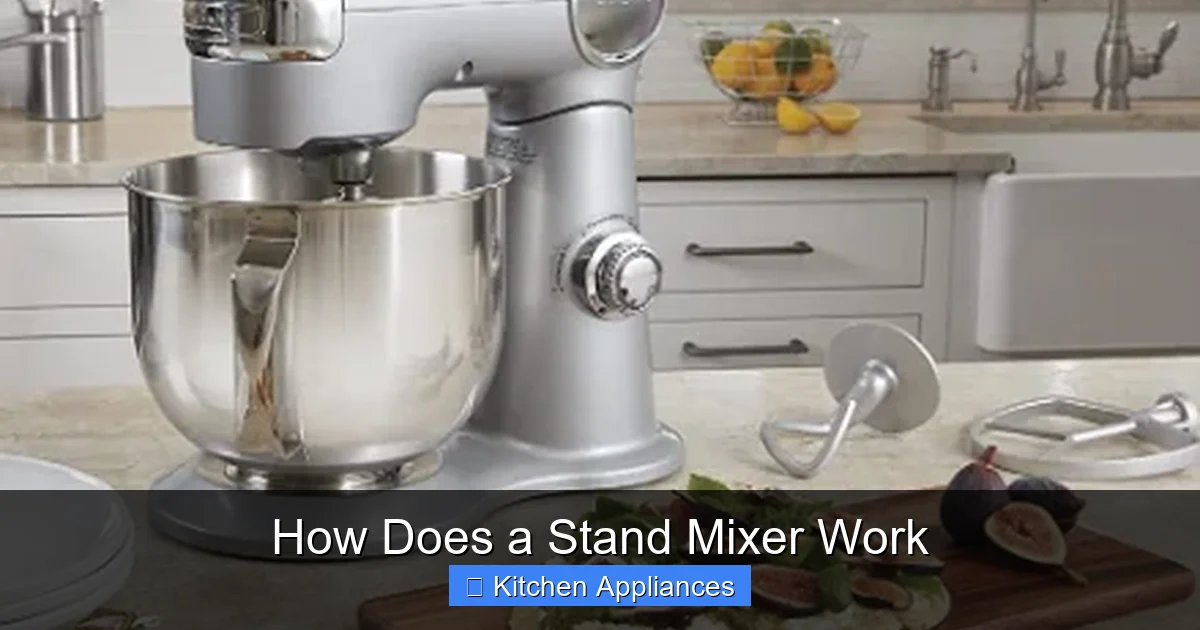
A stand mixer simplifies mixing, kneading, and whipping with a powerful motor and rotating attachments. It uses planetary motion to thoroughly combine ingredients, making it a versatile tool for home bakers and chefs alike.
If you’ve ever watched a professional baker effortlessly whip up a batch of fluffy meringue or knead thick bread dough without breaking a sweat, chances are they were using a stand mixer. These countertop powerhouses have become staples in modern kitchens, not just for serious bakers but for anyone who loves to cook. But how does a stand mixer actually work? What’s happening inside that sleek metal housing that turns raw ingredients into culinary magic?
At first glance, a stand mixer might seem like a simple appliance—just a bowl, a motor, and a few attachments. But beneath its polished exterior lies a cleverly engineered system designed for efficiency, consistency, and durability. Whether you’re making cookie dough, whipping cream, or kneading pizza dough, the stand mixer handles the heavy lifting so you don’t have to. Understanding how it works not only helps you appreciate its design but also empowers you to use it more effectively in your own kitchen.
Key Takeaways
- Motor-driven mechanism: A stand mixer uses an electric motor to power the rotation of mixing attachments.
- Planetary motion: The attachment rotates on its axis while orbiting the bowl, ensuring even mixing.
- Multiple speed settings: Adjustable speeds allow precise control for different tasks like whipping or kneading.
- Interchangeable attachments: Beaters, dough hooks, and whisks handle various recipes from cake batter to bread dough.
- Stable and hands-free: The heavy base keeps the mixer steady, freeing your hands for other tasks.
- Durable and long-lasting: High-quality materials and robust construction make stand mixers a long-term kitchen investment.
📑 Table of Contents
How the Motor Powers the Mixing Action
At the heart of every stand mixer is its electric motor. This compact but powerful component is responsible for driving all the mixing action. When you plug in your mixer and press the speed button, electricity flows into the motor, causing it to spin. The motor is typically located in the base or head of the mixer, depending on the model, and is connected to a gear system that transfers rotational energy to the mixing attachment.
Most stand mixers use a universal motor or a DC motor, both of which offer strong torque—especially important when working with thick doughs. Torque refers to the motor’s ability to maintain speed under load. For example, when kneading bread dough, the resistance is high, but a good stand mixer won’t slow down significantly. This consistent power ensures even mixing and prevents overworking the motor.
One key advantage of the motor in a stand mixer is its reliability. Unlike hand mixers, which can overheat or lose power during long tasks, stand mixers are built for sustained use. They’re designed to handle extended mixing sessions without burning out, making them ideal for large batches or tough recipes. If you’re curious about maintaining your mixer’s performance, check out our guide on how to clean a stand mixer to keep the motor and gears in top shape.
Understanding Planetary Motion

Visual guide about How Does a Stand Mixer Work
Image source: dahanmixer.com
One of the stand mixer’s most distinctive features is its planetary motion. But what does that mean? Simply put, planetary motion refers to the way the mixing attachment moves inside the bowl. The attachment rotates on its own axis (like a planet spinning) while simultaneously orbiting around the center of the bowl (like a planet revolving around the sun). This dual motion ensures that every part of the mixture is reached, eliminating dead zones where ingredients might get stuck.
Imagine trying to mix cake batter with a handheld whisk. You’d have to move it in wide circles, constantly adjusting your motion to reach the corners of the bowl. A stand mixer does this automatically. The planetary action covers the entire bowl surface, scraping the sides and bottom as it goes. This results in a smoother, more consistent mixture with less manual effort.
This design is especially helpful when working with thick or sticky ingredients. For instance, when making peanut butter cookies or heavy bread dough, the planetary motion ensures that dry flour is fully incorporated without leaving clumps. It also reduces the need to stop and scrape the bowl manually—though it’s still a good idea to pause occasionally and give the sides a quick scrape for best results.
Attachments and Their Functions
A stand mixer isn’t just about the motor and motion—it’s also about versatility. Most models come with three primary attachments: the flat beater, the dough hook, and the wire whisk. Each is designed for a specific type of mixing task, and knowing when to use which one can make a big difference in your results.
The Flat Beater
The flat beater, sometimes called the paddle attachment, is the most commonly used. It’s ideal for mixing batters, mashing potatoes, or combining wet and dry ingredients. Its broad, flat shape allows it to scrape the sides of the bowl while mixing, making it perfect for cookie dough, cake batter, and frosting. For example, when making chocolate chip cookies, the flat beater ensures that chocolate chips are evenly distributed without overmixing the dough.
The Dough Hook
The dough hook is shaped like a spiral or J-hook and is designed for kneading bread, pizza dough, or other yeast-based recipes. Its curved design mimics the motion of hand kneading, pushing and folding the dough to develop gluten. This is essential for creating the chewy texture in artisan bread or the soft crumb in dinner rolls. If you’ve ever tried kneading dough by hand, you’ll appreciate how much time and effort the dough hook saves.
The Wire Whisk
The wire whisk, or whip attachment, is used for incorporating air into mixtures. It’s perfect for whipping cream, beating egg whites for meringue, or making light, fluffy frostings. The thin wires spin rapidly, trapping air bubbles and creating volume. For instance, when making a classic buttercream, the whisk attachment helps achieve a smooth, airy texture that’s hard to replicate by hand.
Some advanced models also offer optional attachments like pasta rollers, meat grinders, or ice cream makers. These expand the mixer’s functionality, turning it into a multi-purpose kitchen tool. For a deeper dive into how these attachments enhance your cooking, explore our ultimate guide of stand mixer in kitchen.
Speed Settings and Control
Another key feature of a stand mixer is its range of speed settings. Most models offer anywhere from 6 to 10 speeds, allowing you to fine-tune the mixing process. Lower speeds are ideal for gently combining ingredients or kneading dough, while higher speeds are better for whipping or blending.
For example, when making meringue, you’ll start on low speed to combine the egg whites and sugar, then gradually increase to high to achieve stiff peaks. Starting too fast can cause sugar to fly out of the bowl, while going too slow may prevent proper aeration. The ability to control speed gives you precision and prevents overmixing, which can ruin delicate batters or toughen dough.
Many stand mixers also include a “stir” or “pulse” setting. The stir speed is extremely slow—perfect for folding in chocolate chips or nuts without breaking them. The pulse function gives short bursts of power, useful for chopping nuts or mixing chunky salsas.
It’s worth noting that not all recipes require high speed. In fact, overmixing can be detrimental. For example, overmixing cake batter can lead to a dense, tough cake due to excess gluten development. Using the right speed at the right time is part of mastering the stand mixer.
Design and Stability Features
A stand mixer isn’t just powerful—it’s also built to stay put. One of the biggest advantages over hand mixers is its stability. The heavy base, often made of metal, anchors the mixer to the countertop, preventing it from walking or tipping during use. This is especially important when working with heavy doughs or at high speeds.
The bowl is typically locked into place with a spring-loaded mechanism or twist-lock system. This ensures it doesn’t shift during mixing, which could lead to uneven results or spills. Some models also feature a tilt-head design, where the head lifts up for easy attachment changes and bowl removal, while others have a bowl-lift design, where the bowl rises to meet a fixed head.
Both designs have their pros and cons. Tilt-head mixers are often more compact and easier to store, while bowl-lift models tend to be more stable for heavy-duty tasks. Choosing the right design depends on your kitchen space and cooking habits.
Additionally, many stand mixers come with non-slip feet or suction cups to further enhance stability. This prevents the mixer from sliding around, even on smooth countertops. It’s a small detail, but one that makes a big difference in safety and ease of use.
Maintenance and Longevity
One reason stand mixers are considered a worthwhile investment is their durability. With proper care, a quality model can last for decades. Unlike many small appliances that wear out after a few years, stand mixers are built with robust materials like stainless steel, die-cast metal, and high-grade plastics.
Regular maintenance is key to longevity. After each use, attachments and the bowl should be washed—most are dishwasher safe, but hand washing is gentler. The mixer’s exterior can be wiped down with a damp cloth, and the motor housing should never be submerged in water.
Lubricating the gears periodically (as recommended by the manufacturer) helps keep the motor running smoothly. Over time, dust and grease can build up inside the mechanism, so occasional deep cleaning or professional servicing may be needed.
By taking good care of your mixer, you ensure it continues to perform at its best. For detailed steps on keeping your appliance in top condition, visit our guide on how to clean a stand mixer.
Conclusion
A stand mixer is more than just a convenient kitchen tool—it’s a well-engineered appliance that combines power, precision, and versatility. From its motor-driven planetary motion to its interchangeable attachments and speed controls, every component is designed to make mixing easier, faster, and more consistent. Whether you’re a weekend baker or a daily cook, understanding how your stand mixer works helps you get the most out of it.
By choosing the right attachment, using the correct speed, and maintaining your mixer properly, you can tackle everything from delicate meringues to hearty bread dough with confidence. It’s no wonder that stand mixers have earned a permanent spot on countertops around the world. If you’re ready to elevate your baking game, a stand mixer might just be the upgrade your kitchen needs.
Frequently Asked Questions
How does a stand mixer differ from a hand mixer?
A stand mixer is stationary and hands-free, using a powerful motor and planetary motion for consistent mixing. A hand mixer is portable but requires you to hold and guide it, making it better for lighter tasks.
Can a stand mixer knead bread dough effectively?
Yes, the dough hook attachment is specifically designed for kneading. It mimics hand-kneading motions and can handle thick, heavy doughs with ease.
Why does my stand mixer shake or vibrate during use?
This is often due to an unbalanced bowl or overfilling. Ensure the bowl is securely locked and don’t exceed the recommended capacity. Using the correct speed for the task also helps.
Is it safe to run a stand mixer unattended?
While stand mixers are designed for hands-free use, it’s best to stay nearby, especially during high-speed tasks. Unattended mixers can overheat or cause spills if something goes wrong.
Can I use a stand mixer for chopping vegetables?
Not directly, but some models offer food processor attachments. Always check compatibility and use the correct accessory to avoid damaging the mixer.
How often should I clean my stand mixer?
Clean the bowl and attachments after every use. Wipe down the exterior regularly and deep-clean the motor area as recommended by the manufacturer.
