

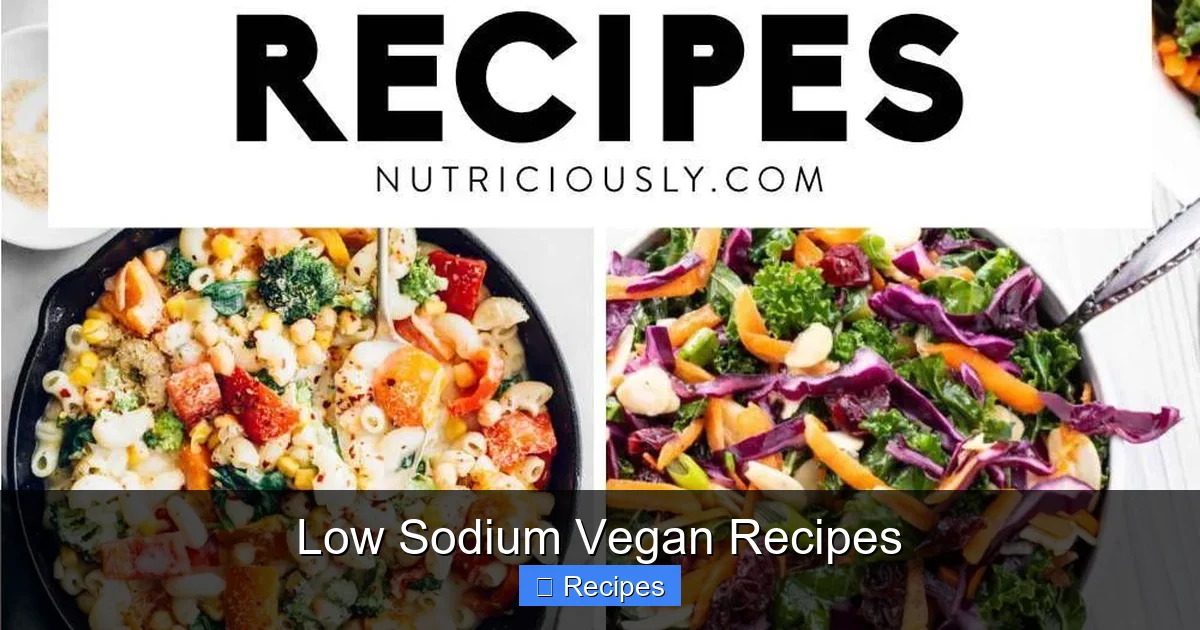
Looking for tasty, heart-healthy meals without the salt? These low sodium vegan recipes deliver bold flavors using fresh, whole ingredients. Whether you’re managing blood pressure or simply eating cleaner, these plant-based dishes prove you don’t need sodium to enjoy every bite.
Key Takeaways
- Flavor without salt: Herbs, spices, citrus, and umami-rich ingredients like mushrooms and tomatoes add depth without sodium.
- Whole foods are naturally low in sodium: Fresh fruits, vegetables, legumes, grains, and nuts form the foundation of these recipes.
- Read labels carefully: Even plant-based packaged foods can be high in sodium—choose low-sodium or no-salt-added versions.
- Meal prep makes it easier: Preparing ingredients in advance helps you stick to a low-sodium vegan lifestyle without stress.
- Great for heart health: A low-sodium vegan diet supports healthy blood pressure and reduces cardiovascular risk.
- Kid-friendly and adaptable: These recipes can be tweaked to suit picky eaters or dietary restrictions.
- No sacrifice on taste: With smart seasoning and cooking techniques, low-sodium meals are anything but bland.
Quick Answers to Common Questions
Can I still eat flavorful food on a low-sodium vegan diet?
Absolutely! Herbs, spices, citrus, and umami-rich ingredients like mushrooms and nutritional yeast add bold flavor without salt. You’ll be surprised how satisfying meals can be.
Are canned beans okay in low-sodium recipes?
Yes, but choose no-salt-added or low-sodium versions and rinse them thoroughly. This can reduce sodium by up to 40%.
What’s a good salt substitute for vegan cooking?
Try lemon juice, vinegar, garlic, ginger, or salt-free seasoning blends. Nutritional yeast also adds a savory, cheesy flavor.
How do I make sure my meals are balanced?
Include a source of plant protein (like beans, lentils, or tofu), healthy fats (avocado, nuts, seeds), and complex carbs (quinoa, sweet potatoes, whole grains).
Can kids eat low-sodium vegan meals?
Yes! These recipes are family-friendly. Just adjust spices to taste and involve kids in meal prep to make it fun.
📑 Table of Contents
Why Choose Low Sodium Vegan Recipes?
Eating healthy doesn’t have to mean giving up flavor—especially when you’re following a vegan diet. In fact, combining plant-based eating with reduced sodium intake can be one of the most powerful ways to support long-term health. High sodium consumption is linked to high blood pressure, heart disease, and stroke, and many people don’t realize how much hidden salt is lurking in processed foods—even those labeled “vegan.”
That’s where low sodium vegan recipes come in. These meals focus on whole, unprocessed ingredients like fresh vegetables, legumes, whole grains, and fruits—all naturally low in sodium and packed with nutrients. By swapping out salty seasonings and processed sauces for bold herbs, citrus zest, garlic, and spices, you can create dishes that are vibrant, satisfying, and kind to your heart. Whether you’re managing a health condition or just want to eat cleaner, these recipes prove that delicious food and low sodium can go hand in hand.
Understanding Sodium in a Vegan Diet
It’s easy to assume that going vegan automatically means eating less sodium—but that’s not always true. While whole plant foods are naturally low in salt, many store-bought vegan products—like plant-based meats, cheeses, soups, and sauces—can be loaded with sodium to enhance flavor and shelf life. A single serving of some vegan burgers or canned soups can contain over 500mg of sodium, which is nearly a quarter of the recommended daily limit.
How Much Sodium Is Too Much?
The American Heart Association recommends no more than 2,300 milligrams of sodium per day, with an ideal limit of 1,500 mg for most adults—especially those with high blood pressure. For context, just one teaspoon of table salt contains about 2,300 mg of sodium. On a low-sodium vegan diet, the goal is to stay well below that threshold by choosing fresh ingredients and making your own sauces and seasonings at home.
Hidden Sources of Sodium in Vegan Foods
Be on the lookout for sneaky sodium sources. Soy sauce, tamari, miso, canned beans (unless rinsed), vegetable broths, and even some breads and cereals can pack a salty punch. Always check nutrition labels and opt for “low-sodium,” “reduced sodium,” or “no-salt-added” versions when available. Rinsing canned beans under water can remove up to 40% of their sodium content—a simple step that makes a big difference.
Flavor Boosters That Aren’t Salt
One of the biggest myths about low-sodium eating is that food has to taste bland. The truth? With the right ingredients, you can create layers of flavor that make salt unnecessary. The key is to think beyond the salt shaker and embrace the natural tastes of plants.
Fresh Herbs and Aromatics
Basil, cilantro, parsley, dill, and mint add brightness and complexity to any dish. Garlic, ginger, onions, and shallots build a flavorful base for soups, stir-fries, and sauces. Sautéing these aromatics in a little olive oil or water releases their natural oils and deepens their taste.
Spices and Heat
Spices like cumin, smoked paprika, turmeric, coriander, and chili powder bring warmth and depth. A pinch of cayenne or a few slices of fresh jalapeño can add a kick that distracts from the lack of salt. Experiment with spice blends like za’atar, garam masala, or homemade curry powder to keep meals exciting.
Citrus and Vinegars
A squeeze of lemon, lime, or orange juice can transform a dish by adding acidity that brightens flavors. Apple cider vinegar, balsamic vinegar, and rice vinegar also enhance taste without sodium. Try marinating tofu or tempeh in a mix of lemon juice, garlic, and herbs for a zesty, low-sodium protein option.
Umami-Rich Ingredients
Umami—the savory “fifth taste”—can satisfy the craving for saltiness. Mushrooms (especially shiitake), sun-dried tomatoes, nutritional yeast, and fermented foods like low-sodium miso or tamari (used sparingly) all deliver that deep, rich flavor. A sprinkle of nutritional yeast adds a cheesy, nutty taste to pasta, popcorn, or roasted veggies—perfect for vegans missing dairy.
5 Delicious Low Sodium Vegan Recipes
Ready to put these ideas into action? Here are five easy, flavorful low sodium vegan recipes that prove healthy eating can be simple and satisfying.
1. Lemon-Herb Quinoa Bowl
This colorful bowl is packed with protein, fiber, and fresh flavor. Cook 1 cup quinoa in low-sodium vegetable broth. Top with roasted chickpeas (tossed in smoked paprika and garlic powder), steamed broccoli, shredded carrots, and avocado slices. Drizzle with a dressing made from lemon juice, olive oil, fresh dill, and a touch of maple syrup. Ready in 25 minutes and under 150mg sodium per serving.
2. Creamy Avocado Pasta
Blend 1 ripe avocado, 1 clove garlic, 1/4 cup fresh basil, juice of 1 lemon, and 2 tablespoons water until smooth. Toss with cooked whole wheat pasta and steamed green beans. Garnish with cherry tomatoes and a sprinkle of nutritional yeast. Creamy, rich, and completely salt-free—under 100mg sodium per serving.
3. Spiced Lentil and Sweet Potato Stew
Sauté diced onions, garlic, and ginger in a pot. Add 1 diced sweet potato, 1 cup red lentils, 1 can no-salt-added diced tomatoes, 4 cups low-sodium vegetable broth, and spices like cumin, turmeric, and cinnamon. Simmer for 25 minutes until tender. Serve with a dollop of plain coconut yogurt. Hearty, warming, and under 200mg sodium per bowl.
4. Zucchini Noodles with Garlic-Tomato Sauce
Spiralize 2 zucchinis into noodles. Sauté in a pan with olive oil, minced garlic, and red pepper flakes. Add 1 cup crushed no-salt-added tomatoes and fresh basil. Toss together and top with chopped walnuts for crunch. Light, fresh, and under 120mg sodium per serving.
5. Baked Tofu with Miso-Ginger Glaze
Press and cube 1 block of firm tofu. Bake at 400°F (200°C) for 20 minutes. Mix 1 tbsp low-sodium white miso, 1 tbsp rice vinegar, 1 tsp grated ginger, and 1 tsp maple syrup. Brush over tofu and bake 10 more minutes. Serve over brown rice with steamed bok choy. Savory, slightly sweet, and under 180mg sodium per serving.
Meal Prep Tips for Success
Sticking to a low-sodium vegan lifestyle is much easier when you plan ahead. Meal prepping not only saves time during the week but also helps you avoid reaching for high-sodium convenience foods when you’re hungry and in a rush.
Prep Ingredients in Batches
Wash and chop vegetables, cook grains like quinoa or brown rice, and rinse and portion beans at the start of the week. Store them in clear containers so you can quickly assemble meals. Pre-marinated tofu or tempeh can go straight into the pan for a fast dinner.
Make Your Own Sauces and Broths
Homemade sauces give you full control over sodium. Try blending cashews with lemon juice and garlic for a creamy Alfredo, or simmering vegetables, herbs, and spices to make your own low-sodium vegetable broth. Freeze portions in ice cube trays for easy use later.
Use Flavorful Seasoning Mixes
Create your own salt-free seasoning blends. Combine garlic powder, onion powder, smoked paprika, oregano, and black pepper for an all-purpose mix. Keep it in a small jar and sprinkle on roasted veggies, popcorn, or grain bowls.
Who Benefits Most from Low Sodium Vegan Recipes?
While anyone can benefit from reducing sodium and eating more plants, these recipes are especially helpful for people with certain health conditions. Those managing high blood pressure, heart disease, kidney disease, or diabetes often find that a low-sodium vegan diet improves their symptoms and overall well-being.
Pregnant women, older adults, and athletes may also benefit from the nutrient density and hydration support of plant-based eating. Plus, because these recipes rely on whole foods, they’re rich in fiber, antioxidants, and essential vitamins—supporting digestion, immunity, and energy levels.
Even if you’re not dealing with a health issue, cutting back on sodium and processed foods can lead to clearer skin, better sleep, and reduced bloating. And since vegan diets are naturally lower in saturated fat and cholesterol, combining them with low sodium creates a powerful foundation for long-term health.
Final Thoughts: Flavorful, Healthy, and Sustainable
Low sodium vegan recipes aren’t just a trend—they’re a sustainable way to eat that supports both personal health and the planet. By focusing on whole, plant-based ingredients and creative seasoning, you can enjoy meals that are good for your heart, your taste buds, and the environment.
Start small: swap one high-sodium meal a week for a homemade low-sodium vegan dish. Experiment with new herbs and spices. Celebrate the natural flavors of vegetables, grains, and legumes. Over time, your palate will adjust, and you may even find that you prefer food without excess salt. With these recipes and tips, eating well has never been easier—or more delicious.
Frequently Asked Questions
What counts as low sodium in a recipe?
A low-sodium recipe typically contains less than 140mg of sodium per serving. For heart health, aim for meals under 500mg per serving.
Is soy sauce allowed in low-sodium vegan cooking?
Regular soy sauce is high in sodium, but you can use low-sodium tamari or coconut aminos in small amounts for flavor.
Can I use store-bought vegetable broth?
Yes, but choose a low-sodium or no-salt-added version. Better yet, make your own at home using vegetables and herbs.
Do low-sodium vegan recipes take longer to cook?
Not necessarily. Many are quick and simple, especially when using pre-cooked grains or canned beans. Meal prep helps save time.
Will I miss salt if I stop using it?
Your taste buds adapt over time. After a few weeks, you’ll likely find that food tastes better and you crave less salt.
Are frozen vegetables okay to use?
Yes, frozen veggies are nutritious and convenient. Just avoid varieties with added sauces or seasonings, which may contain sodium.
