

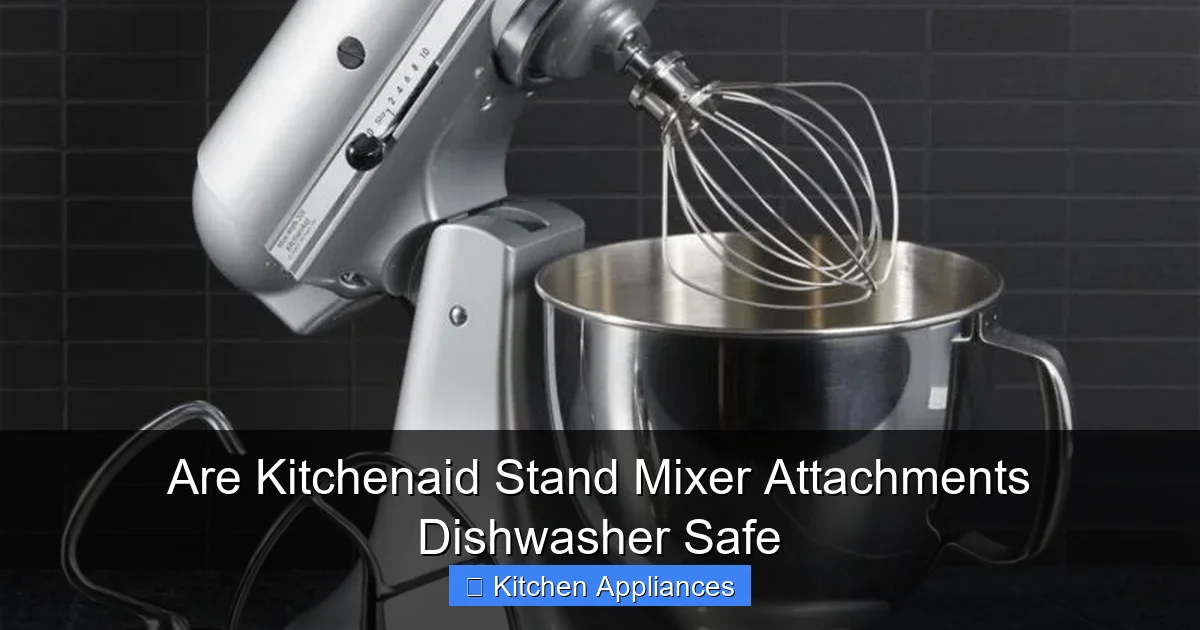
Most KitchenAid stand mixer attachments are dishwasher safe, but not all—always check the manual or packaging. Metal parts like dough hooks and beaters usually handle the dishwasher well, while plastic or electronic components may need hand washing to avoid damage.
If you’ve ever owned a KitchenAid stand mixer, you know it’s more than just a mixer—it’s a kitchen workhorse. From kneading bread dough to whipping cream, this iconic appliance transforms cooking and baking. But once the magic is done, the real question begins: *Can I just toss these attachments in the dishwasher?*
The short answer? **Most metal attachments are dishwasher safe**, but there are important exceptions. KitchenAid designs many of its popular attachments—like the dough hook, flat beater, and wire whisk—with dishwasher-safe materials. However, not every add-on follows the same rules. Some contain plastic components, electrical elements, or special coatings that don’t play nice with high heat and strong detergents. That’s why understanding which parts can go in the dishwasher—and which should be hand washed—is key to keeping your mixer attachments in top shape for years.
In this guide, we’ll walk you through everything you need to know about cleaning your KitchenAid stand mixer attachments safely and effectively. Whether you’re a weekend baker or a daily dough-kneader, knowing the right cleaning method saves time, prevents damage, and extends the life of your tools.
Key Takeaways
- Most metal attachments are dishwasher safe: Dough hooks, flat beaters, and wire whisks can typically go on the top rack of your dishwasher.
- Plastic and electronic parts should be hand washed: Attachments with motors, cords, or delicate plastic housings (like the food processor or ice cream maker) must be cleaned by hand.
- Check the user manual first: KitchenAid provides specific cleaning instructions for each attachment—always refer to the official guide.
- Use mild detergent and avoid harsh chemicals: Strong cleaners can degrade finishes or damage non-stick coatings over time.
- Air-dry thoroughly before storing: Even dishwasher-safe parts should be completely dry to prevent rust or bacterial growth.
- Older models may have different guidelines: Vintage or discontinued attachments might not meet current dishwasher safety standards.
- When in doubt, hand wash: It’s better to spend an extra minute cleaning by hand than risk ruining a pricey attachment.
📑 Table of Contents
Which KitchenAid Attachments Are Dishwasher Safe?
The good news is that the most commonly used attachments—the ones that come standard with most KitchenAid mixers—are generally safe for the dishwasher. These include:
– **Flat Beater (Paddle):** Made from coated metal, this attachment is designed to handle the dishwasher’s heat and water. Just place it on the top rack to avoid warping.
– **Dough Hook:** Typically made of sturdy stainless steel or coated metal, the dough hook is built to withstand dishwasher cycles.
– **Wire Whisk:** Also usually stainless steel, the whisk is dishwasher safe and benefits from a thorough clean after whipping egg whites or cream.
These three are the backbone of most mixing tasks, and KitchenAid explicitly states they’re safe for top-rack dishwasher use. However, always double-check the label or manual that came with your specific model—especially if you have an older mixer or a limited-edition color.
What About Non-Standard Attachments?
Things get trickier with specialty attachments. For example:
– **Food Processor Attachment:** Contains plastic gears and a motor base—definitely not dishwasher safe.
– **Ice Cream Maker:** Has a freezing bowl and electronic components—hand wash only.
– **Pasta Roller & Cutter Set:** While the metal rollers may be dishwasher safe, the plastic housing and gears should be wiped down by hand.
– **Grain Mill:** Often has fine mesh screens and internal mechanisms that can clog or rust in the dishwasher.
In short, if an attachment has moving parts, electronics, or a motor, assume it’s not dishwasher safe unless the manual says otherwise.
How to Safely Clean Dishwasher-Safe Attachments

Visual guide about Are Kitchenaid Stand Mixer Attachments Dishwasher Safe
Image source: dishwasherfixer.com
Even if an attachment is labeled dishwasher safe, a few best practices will help maintain its condition:
– **Use the top rack only:** The bottom rack gets hotter and is more likely to warp or damage coated surfaces.
– **Avoid overcrowding:** Give each attachment space so water and detergent can reach all surfaces.
– **Skip the heated dry cycle:** High heat can degrade non-stick coatings over time. Let parts air dry instead.
– **Use mild detergent:** Harsh or powdered detergents can leave residue or scratch finishes.
After the cycle, inspect your attachments. If you notice any food stuck in crevices (like around the whisk tines), give them a quick scrub with a soft brush. A little extra care goes a long way.
Attachments That Must Be Hand Washed
Not all KitchenAid attachments are created equal when it comes to cleaning. Several popular add-ons require gentle hand washing to avoid damage:
– **Spiralizer Attachment:** The blades and plastic housing can warp or dull in the dishwasher.
– **Meat Grinder:** Metal parts may be dishwasher safe, but the auger, plate, and knife should be hand washed to prevent rust and maintain sharpness.
– **Vegetable Peeler:** Often made with delicate blades and plastic components—hand wash only.
– **Can Opener Attachment:** Contains gears and a cutting wheel that can corrode in the dishwasher.
For these, use warm soapy water and a soft sponge. Avoid abrasive scrubbers that can scratch surfaces. Rinse thoroughly and dry immediately with a clean towel or let air dry completely before reassembling or storing.
Why Hand Washing Matters
Hand washing gives you control. You can gently clean hard-to-reach areas, avoid exposing sensitive parts to heat, and inspect for wear or damage. Plus, it’s often faster than waiting for a full dishwasher cycle—especially if you’re only cleaning one or two pieces.
Tips for Maintaining Your Attachments Long-Term
Cleaning is just one part of keeping your KitchenAid attachments in great condition. Here are a few extra tips:
– **Store properly:** Keep attachments in a dry, dust-free place. Consider using the original box or a dedicated storage container.
– **Inspect regularly:** Look for cracks, rust, or loose parts. Damaged attachments can affect performance and safety.
– **Lubricate moving parts (if needed):** Some attachments, like the pasta roller, may benefit from occasional food-safe lubricant on gears—check the manual for guidance.
– **Avoid soaking metal parts:** Prolonged exposure to water can lead to rust, especially on uncoated steel.
By treating your attachments with care, you’ll get more use out of them—and your mixer will stay in peak condition.
What KitchenAid Says Officially
KitchenAid is clear in its user manuals: **always refer to the specific cleaning instructions for your attachment model**. While many metal parts are dishwasher safe, the company emphasizes that “dishwasher safe” doesn’t mean “indestructible.” Over time, repeated exposure to high heat and harsh detergents can wear down finishes, especially on coated beaters.
For the most accurate info, visit the [KitchenAid support page](https://www.kitchenaid.com) and search for your attachment model. You’ll find downloadable manuals with detailed cleaning and care instructions.
When in Doubt, Hand Wash
If you’re unsure whether an attachment is dishwasher safe, the safest bet is to hand wash it. It takes just a minute, and it protects your investment. Remember: most KitchenAid attachments are designed to last decades—proper cleaning is part of that longevity.
Common Mistakes to Avoid
Even experienced bakers make cleaning errors. Here are a few to watch out for:
– **Putting plastic parts in the dishwasher:** Heat can warp or melt components, especially on older models.
– **Using bleach or abrasive cleaners:** These can strip coatings and damage finishes.
– **Forgetting to dry thoroughly:** Moisture left in crevices can lead to rust or mold.
– **Storing wet attachments:** Always dry completely before putting them away.
A little attention to detail prevents big problems down the line.
Conclusion
So, are KitchenAid stand mixer attachments dishwasher safe? **Yes—but with caveats.** The standard metal attachments like the dough hook, flat beater, and wire whisk are typically safe for the top rack of your dishwasher. However, specialty attachments with plastic, electronic, or mechanical parts should always be hand washed.
The best approach? **Check the manual, use mild detergent, and when in doubt, wash by hand.** Your KitchenAid mixer and its attachments are built to last, and proper cleaning is one of the easiest ways to protect that investment. Whether you’re making bread, ice cream, or pasta, clean tools mean better results—and more joy in the kitchen.
For more tips on getting the most out of your stand mixer, check out our Ultimate Guide Of Stand Mixer In Kitchen—a complete resource for beginners and pros alike.
Frequently Asked Questions
Can I put my KitchenAid dough hook in the dishwasher?
Yes, the dough hook is typically made of dishwasher-safe metal and can be placed on the top rack. Avoid the bottom rack and heated dry cycles to preserve its finish.
Is the KitchenAid flat beater dishwasher safe?
Yes, the flat beater (or paddle) is designed to be dishwasher safe. Use the top rack and mild detergent for best results.
Can I wash the KitchenAid food processor attachment in the dishwasher?
No, the food processor attachment contains plastic and electronic components and must be hand washed. Only the removable blades (if metal) may be dishwasher safe—check the manual.
Why is my KitchenAid beater discolored after the dishwasher?
Discoloration can result from harsh detergents, high heat, or mineral buildup. Try hand washing with mild soap or use a vinegar rinse to restore shine.
Are vintage KitchenAid attachments dishwasher safe?
Older models may not meet current dishwasher safety standards. When in doubt, hand wash vintage attachments to avoid damage.
How often should I clean my KitchenAid attachments?
Clean attachments after every use to prevent food buildup and bacterial growth. Regular cleaning also helps maintain performance and longevity.
