

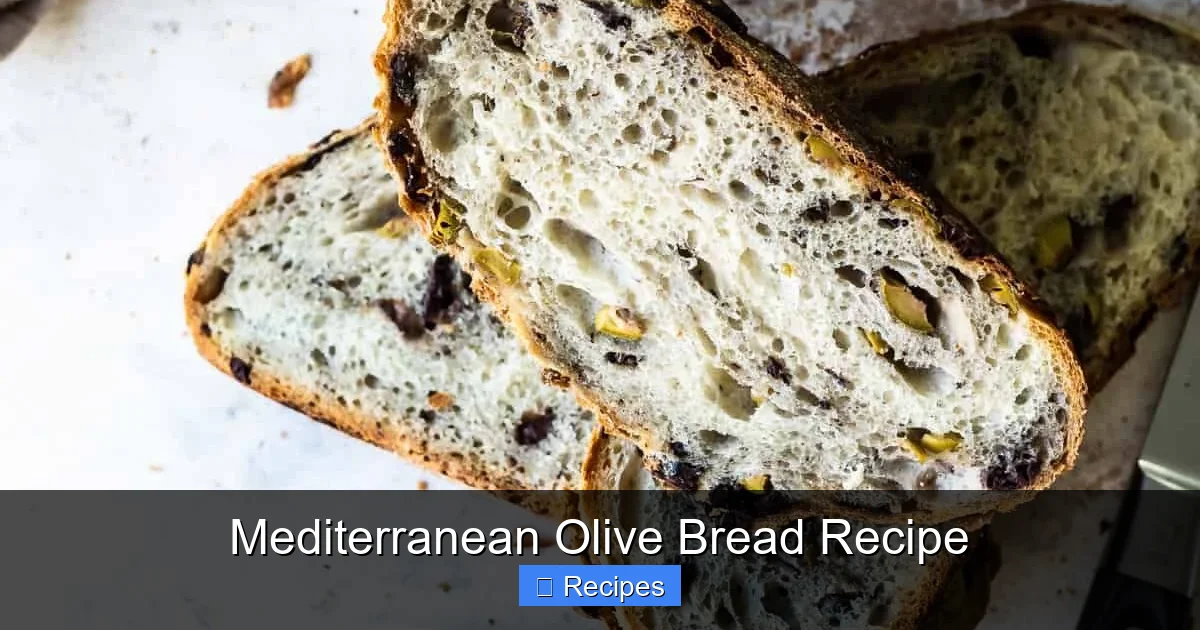
This Mediterranean olive bread recipe delivers bold, savory flavors with minimal effort. Packed with briny olives, fragrant herbs, and a golden crust, it’s ideal for sandwiches, dipping, or enjoying fresh from the oven.
There’s something deeply comforting about the aroma of freshly baked bread wafting through the kitchen—especially when it’s infused with the bold, sun-kissed flavors of the Mediterranean. Imagine tearing into a warm, crusty loaf filled with plump Kalamata olives, fragrant rosemary, and a hint of garlic, all bound together with a soft, chewy crumb. That’s the magic of Mediterranean olive bread: simple ingredients coming together to create something truly special.
This recipe captures the essence of coastal Mediterranean cuisine—rustic, flavorful, and deeply satisfying. Whether you’re hosting a dinner party, preparing a picnic, or just craving a snack with character, this bread delivers. It’s not just a side dish; it’s a centerpiece. And the best part? You don’t need to be a seasoned baker to pull it off. With just a few basic ingredients and a little patience, you can bake a loaf that rivals what you’d find in a seaside Italian trattoria or a Greek village bakery.
Key Takeaways
- Simple ingredients: Uses pantry staples like flour, yeast, olives, and olive oil for authentic Mediterranean flavor.
- No-knead option: Perfect for beginners—minimal hands-on time with a long rise for easy preparation.
- Customizable mix-ins: Add sun-dried tomatoes, garlic, or rosemary to personalize your loaf.
- Great for meal prep: Stays fresh for days and freezes well for future use.
- Perfect pairing: Ideal with soups, salads, cheese boards, or as a side to grilled meats.
- Golden, crisp crust: Achieved with a Dutch oven or baking stone for professional results at home.
- Nutritious twist: Olive oil adds healthy fats, and olives provide antioxidants and rich flavor.
Quick Answers to Common Questions
Can I use canned olives instead of jarred?
Yes, but jarred olives (especially Kalamata) tend to have better flavor and texture. If using canned, rinse them well to remove excess brine and oil.
Can I make this bread vegan?
Absolutely! Just ensure your olive oil is plant-based and skip any butter if brushing the crust. The recipe is naturally dairy-free.
How do I know when the bread is done baking?
The crust should be deep golden brown, and the internal temperature should reach 190–200°F (88–93°C) when measured with a thermometer.
Can I freeze this bread?
Yes! Slice it before freezing and store in an airtight bag. Toast directly from frozen for a quick, fresh-tasting slice.
What if my dough doesn’t rise?
Check your yeast’s expiration date and ensure your water wasn’t too hot (over 115°F kills yeast). A cool room can also slow rising—give it more time.
📑 Table of Contents
Why You’ll Love This Mediterranean Olive Bread
This isn’t your average sandwich bread. Mediterranean olive bread is a celebration of bold, savory flavors that shine through every bite. The combination of briny olives, aromatic herbs, and rich olive oil creates a depth of taste that’s both rustic and refined. It’s the kind of bread that makes people pause and say, “Wow, what’s in this?”
What sets this recipe apart is its versatility. You can enjoy it warm with a drizzle of extra virgin olive oil, use it to make a hearty panzanella salad, or slice it thick for a grilled cheese sandwich that’s anything but ordinary. It also pairs beautifully with Mediterranean staples like hummus, tzatziki, feta cheese, or a simple tomato and cucumber salad. Plus, it’s naturally vegetarian and can easily be made vegan by using plant-based butter or oil.
A Flavorful Journey to the Mediterranean
Every bite of this bread transports you to sun-drenched terraces overlooking the sea. The olives—typically Kalamata or Castelvetrano—add a salty, fruity punch, while fresh rosemary brings an earthy, pine-like fragrance. A touch of garlic deepens the flavor profile, and a generous glug of olive oil ensures the dough stays moist and tender. It’s a harmonious blend that reflects the region’s love for fresh, high-quality ingredients.
Perfect for Any Occasion
Whether you’re serving it at a holiday feast, packing it for a beach picnic, or simply enjoying it with your morning coffee, this bread fits the moment. It’s hearty enough to stand alone but light enough to complement a full meal. And because it holds up well over a few days, it’s a great make-ahead option for busy weeks.
Ingredients You’ll Need
Visual guide about Mediterranean Olive Bread Recipe
Image source: x0.ifengimg.com
One of the joys of this recipe is how approachable it is. You likely already have most of the ingredients in your pantry or fridge. Here’s what you’ll need to make one delicious loaf:
- 3 ½ cups (440g) all-purpose flour: Provides structure and a soft, chewy texture.
- 1 ¼ cups (300ml) warm water: Activates the yeast and hydrates the dough.
- 2 ¼ teaspoons (7g) active dry yeast: Helps the bread rise and develop air pockets.
- 2 teaspoons sugar: Feeds the yeast and adds a hint of sweetness to balance the saltiness.
- 2 teaspoons salt: Enhances flavor and strengthens the gluten.
- ¼ cup (60ml) extra virgin olive oil: Adds richness and keeps the bread moist.
- 1 cup (150g) pitted olives (Kalamata or Castelvetrano): The star ingredient—briny, meaty, and full of flavor.
- 2 tablespoons fresh rosemary, chopped: Adds a fragrant, herbal note.
- 2 cloves garlic, minced (optional): For an extra layer of savory depth.
Choosing the Right Olives
Not all olives are created equal. Kalamata olives, with their deep purple color and rich, fruity flavor, are a classic choice. They’re slightly tangy and pair beautifully with rosemary. Castelvetrano olives, on the other hand, are bright green, buttery, and milder—great if you prefer a less intense olive taste. You can even mix both for a balanced flavor profile. Just be sure to pit them beforehand to avoid any unpleasant surprises while eating.
Fresh vs. Dried Herbs
While dried rosemary can work in a pinch, fresh rosemary truly elevates this bread. Its piney aroma infuses the dough during baking, creating a more vibrant flavor. If you only have dried, use half the amount (1 tablespoon) and rehydrate it slightly by soaking in warm water for 10 minutes before adding.
Step-by-Step Instructions
This recipe uses a no-knead method, making it perfect for beginners or anyone short on time. The long, slow rise develops flavor and texture without requiring any special skills.
Step 1: Activate the Yeast
In a large mixing bowl, combine the warm water (about 110°F or 43°C), sugar, and yeast. Stir gently and let it sit for 5–10 minutes until the mixture becomes frothy. If it doesn’t bubble, your yeast may be inactive—check the expiration date and try again with fresh yeast.
Step 2: Mix the Dough
Add the flour, salt, and olive oil to the yeast mixture. Stir with a wooden spoon or your hands until a shaggy dough forms. It will be sticky—that’s normal. Cover the bowl with plastic wrap or a clean kitchen towel and let it rise at room temperature for 12–18 hours. Yes, really! This long fermentation is what gives the bread its complex flavor and airy texture.
Step 3: Fold in the Olives and Herbs
After the dough has doubled in size, gently stir in the olives, rosemary, and garlic (if using). Be careful not to overmix—just fold them in until evenly distributed. The dough will be very soft and sticky, so use a wet spatula or your hands lightly coated in olive oil.
Step 4: Second Rise
Lightly flour a piece of parchment paper and transfer the dough onto it. Shape it into a loose round or oval loaf. Cover with a towel and let it rise for another 1–2 hours, or until it looks puffy.
Step 5: Preheat and Bake
About 30 minutes before baking, preheat your oven to 450°F (230°C). If you have a Dutch oven, place it inside to heat up—this creates a steamy environment that helps develop a crisp crust. Carefully transfer the dough (with the parchment) into the hot Dutch oven, cover with the lid, and bake for 30 minutes. Remove the lid and bake for another 10–15 minutes until the crust is deep golden brown.
Step 6: Cool and Enjoy
Let the bread cool on a wire rack for at least 30 minutes before slicing. This allows the crumb to set and prevents it from becoming gummy. Serve warm with olive oil for dipping, or slice and toast for a crunchy snack.
Baking Tips for Success
Even simple recipes benefit from a few insider tips. Here’s how to ensure your Mediterranean olive bread turns out perfect every time.
Use a Kitchen Scale
For the most consistent results, weigh your ingredients—especially flour. Measuring by volume can vary greatly depending on how you scoop, but a kitchen scale ensures accuracy.
Don’t Rush the Rise
The long fermentation is key to developing flavor and texture. If your kitchen is cool, the dough may take longer to rise—don’t be tempted to speed it up with heat. Patience pays off.
Create Steam for a Crisp Crust
If you don’t have a Dutch oven, you can still achieve a great crust. Place a baking tray on the oven’s bottom rack while preheating. When you put the bread in, pour 1 cup of hot water into the tray to create steam. This mimics the effect of a professional oven.
Store Properly
Keep the bread in a paper bag or wrapped in a clean towel for up to 3 days. Avoid plastic bags, which can make the crust soggy. For longer storage, slice and freeze in an airtight container for up to 3 months.
Serving Suggestions
This bread shines in so many ways. Try these ideas to make the most of your loaf:
- With dips: Serve warm slices with hummus, baba ganoush, or whipped feta.
- In salads: Cube and toast for a crunchy addition to Greek salad or panzanella.
- As a sandwich base: Use thick slices for a Mediterranean-style sandwich with grilled vegetables, mozzarella, and pesto.
- Alongside soup: Perfect with minestrone, lentil soup, or tomato basil soup.
- With cheese: Pair with aged manchego, goat cheese, or sharp cheddar for a simple appetizer.
Conclusion
Baking Mediterranean olive bread at home is a rewarding experience that brings the flavors of the Mediterranean right to your kitchen. With minimal effort and a few quality ingredients, you can create a loaf that’s not only delicious but also deeply satisfying. Whether you’re a seasoned baker or trying your hand at bread for the first time, this recipe is approachable, forgiving, and full of flavor.
The next time you’re craving something hearty, savory, and full of character, skip the store-bought bread and try this homemade version. Your taste buds—and your kitchen—will thank you. Plus, there’s something truly special about sharing a warm, fragrant loaf with family and friends. So preheat that oven, gather your ingredients, and get ready to enjoy the simple joy of fresh-baked Mediterranean olive bread.
Frequently Asked Questions
What type of olives work best in this recipe?
Kalamata olives offer a rich, tangy flavor, while Castelvetrano olives are milder and buttery. Both work well—choose based on your taste preference or mix them for balance.
Can I add other ingredients like sun-dried tomatoes or cheese?
Absolutely! Add ½ cup of chopped sun-dried tomatoes or ½ cup of grated Parmesan during the folding step for extra flavor. Just don’t overload the dough.
How long does the bread stay fresh?
Stored properly in a paper bag or wrapped in a towel, it stays fresh for 2–3 days at room temperature. For longer storage, freeze for up to 3 months.
Do I need a Dutch oven to bake this bread?
No, but a Dutch oven helps create steam for a crisp crust. If you don’t have one, use a baking sheet and add a tray of hot water to the oven for steam.
Can I use whole wheat flour instead of all-purpose?
You can substitute up to half the all-purpose flour with whole wheat, but the texture will be denser. For best results, stick to all-purpose or bread flour.
Is this bread suitable for people with gluten sensitivities?
This recipe contains gluten from wheat flour. For a gluten-free version, use a certified gluten-free flour blend and ensure all other ingredients are gluten-free.
